Showing posts with label News. Show all posts

Thursday, March 26, 2015

BitWhisper: Stealing data from the computers which are not connected with internet using heat


No matter how secure you think a computer is, there’s always a vulnerability somewhere that a remote attacker can utilize if they’re determined enough. To reduce the chance of sensitive material being stolen, many government and industrial computer systems are not connected to outside networks. This practice is called air-gapping, but even that might not be enough. The Stuxnet worm from several years ago spread to isolated networks via USB flash drives, and now researchers at Ben Gurion University in Israel have shown that it’s possible to rig up two-way communication with an air-gapped computer via heat exchange.
Researchers call this technique of harvesting sensitive data “BitWhisper.” It was developed and tested in a standard office environment with two systems sitting side-by-side on a desk. One computer was connected to the Internet, while the other had no connectivity. This setup is common in office environments where employees are required to carry out sensitive tasks on the air-gapped computer while using the connected one for online activities.
BitWhisper does require some planning to properly execute. Both the connected and air-gapped machines need to be infected with specially designed malware. For the Internet box, that’s not really a problem, but even the air-gapped system can be infected via USB drives, supply chain attacks, and so on. Once both systems are infected, the secure machine without Internet access can be instructed to generate heating patterns by ramping up the CPU or GPU. The internet-connected computer sitting nearby can monitor temperature fluctuations using its internal sensors and interpret them as a data stream. Commands can also be sent from the Internet side to the air-gapped system via heat.
The malware is able to use the heat patterns as a covert data channel between the machines, thus defeating the air-gap. The data rate between the connected and air-gapped computers isn’t particularly fast — it’s somewhere around eight bits per hour. Still, that’s enough to snatch passwords and text files over time. Because all the data theft takes place over invisible heat signals, there are almost no signs of intrusion in the secure network.
Once the malware has found a home in the air-gapped network, it can be instructed to spread to other computers in search of more heat-driven communication channels. The researchers say a secure network is vulnerable to BitWhisper anywhere an internet-connected PC is 15-inches or less away from an air-gapped system. BitWhisper can seek out new connections by sending out periodic “thermal pings” to link up nearby computers.

The researchers demonstrated BitWhisper using a computer with a USB missile-launcher toy attached. In the video above, they were able to send heat commands from the connected system over the air-gap to the isolated system and control the missile launcher. There are a lot of things that can go wrong with this system — something as small as a desk fan could break the connection. Still, it’s an ingenious proof-of-concept.

Tuesday, March 17, 2015

TINY CIRCULATOR IN PHONES COULD DOUBLE BANDWIDTH

Radio wave circulator developed by researchers at the Cockrell School of Engineering.

Engineers have found a way to dramatically shrink a critical component of cellphones and other wireless devices.
A much smaller, more efficient radio wave circulator has the potential to double the useful bandwidth in wireless communications by enabling full-duplex functionality—meaning devices can transmit and receive signals on the same frequency band at the same time.
The researchers did it by ditching the magnets.
“We are changing the paradigm with which isolation and two-way transmission on the same frequency channel can be achieved. We have built a circulator that does not need magnets or magnetic materials,” says Andrea Alu, an associate professor at the Cockrell School of Engineering at the University of Texas at Austin.

Since the advent of wireless technology 60 years ago, magnetic-based circulators have been in principle able to provide two-way communications on the same frequency channel, but they are not widely adopted because of the large size, weight, and cost associated with using magnets and magnetic materials.
Freed from a reliance on magnetic effects, the new circulator has a much smaller footprint while also using less expensive and more common materials.
The prototype circulator is 2 centimeters in size—more than 75 times smaller than the wavelength of operation. The circulator may be further scaled down to as small as a few microns, according to the researchers.
The design is based on materials widely used in integrated circuits such as gold, copper, and silicon, making it easier to integrate in the circuit boards of modern communication devices.


HOW IT WORKS

The researchers’ device works by mimicking the way magnetic materials break the symmetry in wave transmission between two points in space, a critical function that allows magnetic circulators to selectively route radio waves.
With the new circulator, the researchers accomplish the same effect, but they replaced the magnetic bias with a traveling wave spinning around the device.
Another unique feature is that the new circulator can be tuned in real time over a broad range of frequencies, a major advantage over conventional circulators.
“With this technology, we can incorporate tunable nonreciprocal components in mobile platforms,” says Nicholas Estep, lead researcher and a doctoral student in electrical and computer engineering. “In doing so, we may pave the way to simultaneous two-way communication in the same frequency band, which can free up chunks of bandwidth for more effective use.”

FEWER DROPPED CALLS

For telecommunications companies, which pay for licenses to use frequencies allotted by the US Federal Communications Commission, a more efficient use of the limited available bandwidth means significant cost advantages.
Additionally, because the design of the circulator is scalable and capable of circuit integration, it can potentially be placed in wireless devices.
“We envision micron-sized circulators embedded in cellphone technology. When you consider cellphone traffic during high demand events such as a football game or a concert, there are enormous implications opened by our technology, including fewer dropped calls and clearer communications,” Estep says.

The circulator also could benefit other industries that currently use magnetic-based circulators. For instance, circulators used in phased arrays and radar systems for aircraft, ships, and satellites can be extremely heavy and large, so minimizing the size of these systems could provide significant savings.

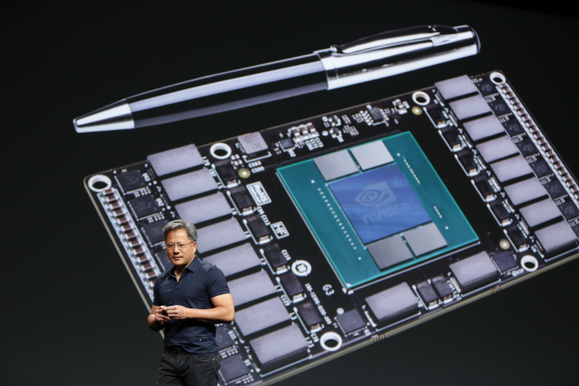
Nvidia's next-gen Pascal GPU

Nvidia's next-gen Pascal GPU will offer 10x the performance of Titan X, 8-way SLI

If Nvidia's beastly new Titan X graphics card wows you—and it should—well, hold onto your pants: The company said it's next-gen GPU technology, codenamed Pascal, will offer roughly ten times the performance of the Titan X, at least in compute tasks.

The next-generation GPU from Nvidia would also offer a host of new technologies, including 3D-stacked memory and NVLink, said CEO Jen-Hsun Huang during the GPU Technology Conference's keynote in San Jose. The GPU will essentially be a super computer, Huang said, and Nvidia is shooting for it to be ten times faster than today's Maxwell-based GPUs.

Huang also revealed that a Pascal GPU could run up to 32GB of RAM, rather than the maximum of 12GB a Maxwell-based card can use.

All-important memory bandwidth—which can choke a GPU's performance if it can't keep up—will be three times that of Maxwell. Since Pascal will feature the company's upcoming NVLink technology, which Nvidia claims outperforms PCI-E by five times, Huang says he expects to be able to run up to eight discrete GPUs in a single machine, rather than today's limit of four.


Volta
Also back on Nvidia's roadmap is its Volta chip. Volta was originally scheduled to be the follow up to its Maxwell parts but was mysteriously pulled from last year's GTC roadmap, with Pascal put in its place. The roadmap Huang showed off showed Pascal availability in 2016, with Volta slated for 2018.
No details of Volta were revealed, but that GPU was to use stacked RAM and unified memory. Pascal is now expected to be the first GPU from Nvidia to use stacked RAM chips and NVLink.

Saturday, December 27, 2014

Intel’s Core M

Is Intel’s Core M efficient

Updated(27-12-2014)
At IFA 2014, Intel gave us the full skinny on its fifth-generation Broadwell-based Intel Core M CPUs. The chips would be thinner, and more energy-efficient than past CPUs, while also offering solid performance. They would pave the way for slimmer, lighter devices than anything we’ve ever seen before.
If our time with the Core M-powered Lenovo Yoga 3 Pro is any indication, that latter bit is true. But what about the energy efficiency and performance aspects? Does Core M measure up, or does it come up short?
What’s Core M supposed to do again?
The most efficient chips from about four years ago need 18.5 watts to operate. Similar chips from last year require 11.5 watts of power. Core M cuts that number down drastically, asking for a mere 4.5 watts of juice.
However, there’s more to Core M than increased efficiency, and (presumably) better battery life for whatever devices it’s in. Core M chips are also, as we mentioned, much smaller than their older siblings. Core M hardware measures 30 x 16.5 x 1.05 millimeters thick, while fourth-generation Intel hardware measures 40 x 24 x 1.5 millimeters. That’s a significant reduction
Related: Intel dishes on Core M at IFA 2014
So, it’s simple math. Smaller hardware means more space in system cases for PC makers to work with. This, in turn, leads to slimmer, and lighter devices, like in the case of the Yoga 3 Pro.
Also, because Core M sips on energy, it can operate while fan-less. This allows computer manufacturers to omit components from their systems that are associated with keeping internals cool, including fans, heat-sinks, and air vents.
Sizing up our Core M chip
Keep in mind that Core M consists of a family of chips, not just one part. The one we got our hands on, the 5Y70, is the second most powerful Core M chip that Intel is launching as part of this wave of silicon. The Intel Core M-5Y70 is a dual-core chip clocked at 1.1GHz, with a Turbo Boost clock of 2.6GHz.
Not only is this the fastest Core M chip that’s out now, it’ll only be 100MHz slower than the highest-end Core M chip that Intel is launching this year. The next chip up on the totem pole is the 5Y71. That CPU runs at 1.2GHz, sports a Turbo Boost clock of 2.9GHz, and is also a dual-core chip.
Graphics performance
Processing power may not be the CPU’s forte, but how does the Core M’s Intel HD Graphics 5300 GPU get by?
The Lenovo Yoga 2 Pro scored 3,889 in 3DMark Cloud Gate, and 579 in 3DMark Fire Strike. The Dell XPS 13 got 4,507 and 627 in the same tests, respectively. The Lenovo Yoga 3 Pro lags behind both significantly, with scores of 2,636 in Cloud Gate, and 376 in Fire Strike.
Though the Yoga 2 Pro and the Dell XPS 13 don’t conquer these tests, they’re in a different league. Both have well over 1,000 points on the Yoga 3 Pro in 3DMark Cloud Gate, and scores that are at least 200 points higher in Fire Strike.
Combine that with real-world performance, and you’ve got yourself a clear picture of what a graphics chip can do. We fired up League of Legends, a popular game that’s also the least demanding title we use to test GPUs.
Forget about enjoying it with the Core M, at least on the Yoga 3 Pro. With League of Legends running at the display’s native resolution of 3,200 x 1,800, the game ran between 18, and 8 frames per second. The game’s visual details were set to Medium.
For what it’s worth, we’re curious to see how Core M will fare on 720p and 1080p systems. We think it could manage at 1080p based on its 3DMark score, if only by the skin of its teeth.
Better endurance
In the Peacekeeper Web browsing benchmark test, the Lenovo Yoga 3 Pro lasted only three hours and 44 minutes on a single charge. That’s a notable improvement of 30 minutes over the Yoga 2 Pro’s time of three hours and 14 minutes. Both notebooks have 3,200 x 1,800 displays.
The Dell XPS 13 is in another league here, lasting seven hours and 48 minutes in the same test. Of course the 13 has a much less demanding 1080p display to work with.
Since both Yogas are forced to push an extremely high amount of pixels, the battery is taxed significantly as a result.
These days, 1080p is the sweet spot of display resolutions. That’s especially the case with laptops, where battery life has to be a key consideration when PC makers outfit their systems.
As with graphics capabilities, we want to see what Core M can provide in a 720p or 1080p system. In the Yoga 3 Pro, however, no amount of CPU-centric power efficiency can save Lenovo’s latest from a poor battery life score.
Better than it seems
The Intel Core M looks like a disappointment. It’s not as quick as previous Intel 4th-generation processors, and it doesn’t always lead to outstanding battery life. You might be wondering – what’s the point?
Closer inspection, however, reveals there’s actually significant improvement here. Consider the multi-core GeekBench score of 4,267. That’s several hundred less than the an ultrabook with an Intel Core i5-4200U, but that 4th-generation processor has a quoted Thermal Design Power (TDP) of 15 watts. The  Core M-5Y70 has a quoted TDP of 4.5 watts. On paper that means the Core M manages almost equivalent performance on a third of the power. In reality TDP does not translate to actual power draw (it’s a guideline for laptop manufacturers, not a benchmark), but in any case it’s clear the Core M consumes far less juice.
That may be hard to believe given the Yoga 3 Pro’s poor battery life, but several of Lenovo’s design decisions make life difficult even for the Core M. The most important is not the screen but rather the battery, which is rated at 44 watt-hours. That’s not small, but it’s not large, and it’s ten watt-hours smaller than the battery in the Lenovo Yoga 2 Pro. In other words, Lenovo’s design choice to save weight by reducing the size of the battery has mostly negated the advantage of the new, power-sipping processor. Most manufacturers will not make the same decision.
And remember, this early look at Core M and Broadwell is just the first slice of the pie. CES 2015 is where Intel will reveal the meat of its product line, and while the official details of those chips aren’t yet available it’s safe to assume we’ll see some with a 15 watt TDP (or somewhere near), just as with the 4th-generation Core line. Those processors will likely manage a noticeable boost in both battery life and performance. 2015 may prove an excellent time to upgrade if you own a laptop that’s getting on in years.

Monday, July 21, 2014

GoTenna

The $300 GoTenna turns your smartphone into a CB radio, lets you send messages when you have no cell signal

goTenna
If you’ve ever had a cell phone, you know how frustrating it can be when your network fails. Areas with little to no signal can be absolutely infuriating, and overcrowded events can be just as bad. To sidestep this problem, the folks at GoTenna have developed their own ad-hoc network for sending messages. It’s an incredible concept, but with an asking price higher than most smartphones, there’s no way that this implementation is going to take off anytime soon.
The GoTenna is essentially a small, low-power (2 watts) radio transceiver. It’s powered by a lithium-ion battery, and it connects to your smartphone or tablet via Bluetooth. The company behind GoTenna is rather vague about the technical specifications of the device, but given the max claimed range (up to 50 miles), it probably transmits on a very low frequency (and probably has very low max bandwidth). GoTenna creates an ad-hoc, encrypted network between any other GoTennas in range. It’s kind of like a smartphone equivalent of a CB radio.
You can connect the GoTenna to any iOS or Android device via Bluetooth. After that, all you have to do is download the GoTenna app and fire off a message to anyone else who might be in range. Depending on your elevation and environment, the signal can travel upwards of 50 miles. By default, only your intended recipient will be able to read your message, but a “shout” feature allows messaging any GoTenna user within range. It doesn’t use cell towers or WiFi at all, so it’ll work even if all other forms of communication are unavailable.
In the video embedded above, the GoTenna team lays out a number of use cases for this device. People out in the boonies without cell signal and people at crowded events are the target demographic here, but it does require that everyone buys into the GoTenna platform. If you’re the only one with this radio in your pocket, it’s not going to do you a lick of good.
GoTenna animated GIF
Currently, the GoTenna is being offered for pre-order at a cost of $150 per pair. Once enough units are sold to fund the initial production run, the price will jump up to $300 per pair. I’m sure that it’s quite expensive to get this handy gadget produced, but that price point just isn’t low enough for mainstream success. Only the most hardcore hikers and gadget enthusiasts will be willing to drop $300 on this device. It’s a clever idea, but its limited utility doesn’t justify that kind of expense for most people. [Read: How to build your own GPS receiver.]
Frankly, this kind of tech would probably be a lot better if it was built into smartphones. An ad-hoc or mesh network for messaging sounds incredibly useful, but it will take a company like Apple or Google to bring that concept to the mainstream. If this functionality was just baked into every iPhone or Galaxy S, it would make a lot more sense for consumers. As it stands, this expensive smartphone accessory seems to be little more than a novel curiosity.

Saturday, March 8, 2014

Virus Can Infect Wi-Fi Networks


The researchers have recently created a Wi-Fi virus that can spread through populated areas like the common cold can spread between humans. The experts designed and simulated an attack by a virus dubbed “Chameleon”. It turned out that the virus spread quickly between homes and businesses, but couldn’t avoid detection and identify the points at which Wi-Fi access is least protected by encryption and passwords.

wifi-virus.gif

Although this Wi-Fi attack was only a computer simulation, the researchers found that their virus behaved just like an airborne virus. They believe that it may have the following explanation: since areas that are more densely populated have more APs in closer proximity to each other, the Chameleon propagated more quickly, especially across networks connectable within a 10-50 meter distance.

The researchers pointed out that when “Chameleon” attacked an AP the virus didn’t affect how it worked, but could collect and report the credentials of all other Wi-Fi users connected to it. Chameleon then used this information to connect to and infect other users. If an AP was encrypted and password protected, Chameleon just moved on to find the APs that weren’t strongly protected. Of course, coffee shops and airports turned out to be hotbeds of infection.

The researchers admitted it was earlier assumed that it‘s impossible to develop a virus able to attack Wi-Fi networks. However, this experiment showed that it’s actually possible and such virus, if created in real life, will spread very quickly and harm lots of Internet users.

Saturday, February 8, 2014

Sony sells PC business, cuts 5,000 jobs


Sony announced a series of major changes Thursday and warned of a loss of $1 billion this year as it struggles to get a turnaround plan back on track.

Sony said it was selling its loss-making Vaio PC unit, spinning out its television business and cutting 5,000 jobs.
The Japanese electronics group said it expects to lose 110 billion yen ($1.1 billion) for the year ending March 31. The forecast was a surprise, and a sharp downgrade from its previous estimate of 30 billion yen profit.
Sony (SNE) has been dogged for years by poor results in its legacy consumer electronics, PC and television businesses, which face increased global competition and low margins.
After a brief return to profit last year, things are now so bad that Moody's has decided that Sony is no longer worthy of an investment-grade credit rating. The agency downgraded Sony to junk last month, warning that profitability would likely remain "weak and volatile." Fitch made the same move in late 2012.
Related story: Sony downgraded to 'junk'
Sony said Thursday that private equity group Japan Industrial Partners will buy the Vaio PC business. While no price was disclosed, Sony shares had risen throughout the day on reports that a deal was near.
After a banner year in 2013, the stock has dropped 11% so far this year -- a move that has largely mirrored the Nikkei.
The company also detailed a plan to spin out its TV division by July. Operating the business as a subsidiary should allow it to turn a profit during fiscal year 2014, Sony said.
The changes announced Thursday will cost 90 billion yen and reflect an admission that the company's turnaround strategy under CEO Kazuo Hirai was falling short of expectations.
Even as the company restructured and cut costs, Hirai had resisted any reduction in Sony's wide-ranging product line. Instead, Sony executives have tried to make improvements in mobile devices and games.

Tuesday, January 14, 2014

Google purchased Nest Labs for $ 3.2 Billion


Google announced a new household products according to manufacturer 'buy' Nest Labs has taken. Nest Labs was started in 2010, and it is very popular because of their modern equipment. Co. thermostat tracks the controller, carbon mono oxide smoke equipment is selling these devices it is important that they be controlled via Android and iPhone Applications can be.


Despite selling the Nest Google will continue to work with their existing staff. Google with Nest Lab has yet to announce his future plans., But now it seems that Google Consumer Digital Technology is also increasing.

Join Us on Facebook


Saturday, January 4, 2014

Bill Gates Says Control-Alt-Delete was a mistake

Bill Gates Says Ctrl+Alt+Delete is IBM's Fault


Ctrl + Alt + Del. You've probably done it hundreds of times over the years you've been using computers. But did you know that Bill Gates never wanted that sequence to exist in the first place? Apparently, Gates wanted the function of Ctrl + Alt + Delete to be taken care of with a single button. Unfortunately, IBM's keyboard design didn't allow for it.
"It was a mistake," the Verge quotes Gates as saying during an interview at a Harvard fundraising campaign. "We could have had a single button, but the guy who did the IBM keyboard design didn't wanna give us our single button."
Despite Gates' admission that he sees the combination as a mistake, it still exists on Windows machines today. The engineer that came up with it is David Bradley, who worked as a designer on early IBM computers. According to CNN, Bradley says they didn't mean for it to be available outside of development.
"I originally intended for it to be what we would now call an Easter egg -- just something we were using in development and it wouldn't be available elsewhere," Bradley said in 2011. "But then (software publishers) found out about it. They were trying to figure out how to tell somebody to start up one of their programs, and they had the answer. Just put the diskette in, hit Control-Alt-Delete, and by magic your program starts."
Bill Gates left Microsoft Gates stepped down from his position as CEO of Microsoft in January of 2000 and instead filled the role of 'Chief Software Architect.' In 2008, he stopped working full-time at Microsoft to focus more on his philanthropy.

September 26, 2013 

Tuesday, December 17, 2013

PAKISTANI STUDENTS SENT SATELLITE TO SPACE VIDEO


PAKISTANI STUDENTS SENT SATELLITE TO SPACE


         iCUBE-1 Launch  .


A Stupendous Achievement by Institute of Space Technology

Pakistan’s first Cubesat satellite, iCUBE-1, was launched on Thursday at 1210 hrs onboard Dnepr launch vehicle from Yasny launch base, Russia. It is welcoming news for Higher Education Institutions, students and researchers of Pakistan that Institute of Space Technology (IST) has etched its name among the foremost universities in the World who have built and launched a cubesat satellite. This CUBESAT satellite will open up a wide vista of future experiments that can be carried on cubesats in the domain of imaging, microgravity, biology, nano technology, space dynamics, chemistry, space physics and various other fields. Cubesats can also provide a test bed for developing satellite constellations for specific applications. Institute of Space Technology has achieved this astounding success in a short span of ten years, owing to the concerted efforts by its leadership, students and faculty to standout in this field and to create a national center of excellence in space technology. The Vice Chancellor IST, Imran Rahman congratulated ‘Team IST’ for this great achievement.  He specifically thanked the Federal Minister for Planning, Development & Reforms, Prof. Ahsan Iqbal, Chairman HEC and Chairman of our National Space Agency for their continuous encouragement, support and help in achieving this milestone.
ICUBE-1 has been launched in a polar orbit, 600 Km above the surface of the Earth, and is designed to take low resolution images of Earth and other space objects. Initially, ICUBE-1 will transmit a Continuous Wave Morse coded beacon with message “ICUBE-1 First CubeSat of Pakistan”. Ham radio operators have a great opportunity to hear those signals on the VHF band. ICUBE-1 has a mass of 1.1 Kg and is thus categorized as a pico-satellite. The satellite has a volume of 10cm cube and it houses several sensors to collect data for scientific purposes. ICUBE-1 is a fully autonomous satellite and is capable of maintaining its health via its on-board computer. The satellite will send its health data to ground stations and can also be commanded from Satellite Tracking and Control Station at IST.
Launch of ICUBE-1 is a significant milestone in the space program of Pakistan as it will motivate our youth to take a more active part in the future satellite development program of Pakistan.

Join Us On Facebook


Saturday, October 19, 2013

Li-Fi

بیجنگ: چینی سائنسدانوں نے بلب کی روشنی کے ذریعے انٹرنیٹ کے استعمال کی نئی ٹیکنا لوجی”لائی فائی“ کی ایجاد کا دعویٰ کیا ہے جو موجودہ ”وائی فائی“ ٹیکنالوجی سے زیادہ مؤثر اور سستی ہے۔


لائی فائی ٹیکنالوجی کو باقاعدہ طور پر 5 نومبر کو شنگھائی میں نمائش کےلئے پیش کیا جائے گا۔ فوٹو؛ فائ


چینی خبر رساں ادارے کے مطابق شنگھائی انسٹیٹوٹ آف ٹینکنیکل فزکس آف دی چائنیز اکیڈی آف دی سائنسز میں ”لائی فائی“ ٹیکنالوجی پر کام کرنے والی ٹیم کی سربراہ پروفیسر چائی نان نے کا کہناہے کہ ان کی ٹیم ”لائی فائی“ کے ذریعے ایسی ٹیکنالوجی ایجاد کرنے میں کامیاب ہوئی ہے جس کے تحت ایک واٹ ایل ای ڈی بلب کی روشی سے نکلنے والی شعاعوں سے 4 کمپوٹرز پر بیک وقت انٹرنیٹ استعمال کیا جا سکتا ہے، “لائی فائی” ٹیکنالوجی میں ڈیٹا ریڈیو فریکوینسی کے بجائے روشی کے ذریعے سفر کرتا ہے ۔ چائی نان کا کہنا ہے کہ لائی فائی ٹیکنالوجی کے ذریعے انٹرنیٹ کے حصول کے لئے ایل ای ڈی بلب پر خصوصی مائکروچپس چسپاں کرکے روشنی کی شعاعوں کے ذریعے انٹرنیٹ تک رسائی حاصل کی گئی اور اس نئی ٹیکنالوجی کے ذریعے انٹرنیٹ کی رفتار 150 میگا بائٹس فی سیکنڈ تک بڑھائی جاسکتی ہے جو چین میں انٹرنیٹ کی موجودہ رفتار سے زیادہ تیز ہے۔سائنسدانوں کی جانب سے ایجاد کی گئی نئی ٹیکنالوجی کو باقاعدہ طور پر 5 نومبر کو شنگھائی میں نمائش کےلئے پیش کیا جائے گا۔


Li-Fi to replace Wi-Fi


Beijing: Chinese scientists have successfully developed a new cheaper way of getting connected to internet by using signals sent through light bulbs instead of radio frequencies as in 'Wi-Fi', a move expected to radically change process of online connectivity. Four computers can be connected to internet through one- watt LED bulb using light as a carrier instead of traditional radio frequencies, as in Wi-Fi, said Chi Nan, an information technology professor with Shanghai's Fudan University. Under the new discovery dubbed as 'Li-Fi', a light bulb with embedded microchips can produce data rates as fast as 150 megabits per second, which is speedier than the average broadband connection in China, said Chi, who leads a Li-Fi research team including scientists from the Shanghai Institute of Technical Physics of the Chinese Academy of Sciences.


Four computers can be connected to internet through one- watt LED bulb using light as a carrier instead of traditional radio frequencies. (Reuters)


The term Li-Fi was coined by Harald Haas from the University of Edinburgh in the UK and refers to a type of visible light communication technology that delivers a networked, mobile, high-speed communication solution in a similar manner as Wi-Fi. With Li-Fi cost-effective as well as efficient, netizens should be excited to view 10 sample Li-Fi kits that will be on display at the China International Industry Fair that will kick off on November 5 in Shanghai. The current wireless signal transmission equipment is expensive and low in efficiency, Chi said. "As for cell phones, millions of base stations have been established around the world to strengthen the signal but most of the energy is consumed on their cooling systems," she said. "The energy utilisation rate is only 5 per cent," state-run Xinhua news agency quoted her as saying. Li-Fi was touted as a boon to China netizen community, the highest in the world with about 600 million connections. Compared with base stations, the number of light bulbs that can be used is practically limitless. Meanwhile, Chinese people are replacing the old-fashioned incandescent bulbs with LED light bulbs at a fast pace. "Wherever there is an LED light bulb, there is an Internet signal. Turn off the light and there is no signal," Chi said. However, there is still a long way to go to make Li-Fi a commercial success. "If the light is blocked, then the signal will be cut off," Chi said. More importantly, according to the scientist, the development of a series of key related pieces of technology, including light communication controls as well as microchip design and manufacturing, is still in an experimental period
.

Join Us On Facebook